Property Maintenance for Historic and Modern Buildings
Property maintenance is never just maintenance when the building has architectural ambition. A century-old residence with hand-cut millwork and a new multi-family building with high-performance glazing both ask the same fundamental question: who is paying attention before small defects become expensive failures?
The answer depends on the building. Historic properties need patience, documentation, and a respect for original materials. Modern buildings need technical fluency, coordination across systems, and a disciplined maintenance rhythm. Luxury homes need all of that, plus discretion, finish-level care, and trades who understand that a repair can be technically correct and still unacceptable if it leaves the wrong sheen on a plaster wall or a visible fastener on a custom panel.
The best property maintenance programs are quiet. They do not announce themselves. They preserve value, prevent disruption, and allow owners, residents, and property managers to enjoy the building without being pulled into avoidable decisions every month.
Maintenance begins with the building’s identity
A building reveals how it wants to be maintained. You can see it in the roofline, the foundation, the windows, the way water moves across the site, and the materials chosen for the façade. A historic home may tolerate a century of movement in its framing but react badly to impermeable coatings. A modern concrete and glass residence may look impervious yet rely heavily on sealants, membranes, mechanical ventilation, and perfectly managed drainage.
This is where experienced property maintenance separates itself from ordinary repair work. A good contractor does not arrive with a generic checklist and a truck full of standard parts. They read the building. They ask what has changed, where moisture is travelling, which materials are original, which repairs have already been attempted, and which components are nearing the end of their service life.
On heritage properties, that reading often starts with restraint. The temptation is to replace. Replacement feels decisive, especially when timber is weathered, plaster has cracked, or masonry looks tired. Yet many historic components can be repaired, consolidated, repointed, or refinished with better long-term results than a full replacement. The craft lies in knowing when preservation is wise and when sentiment is about to become an expensive liability.
Modern properties require a different kind of restraint. Their failures are often concealed. A poorly detailed balcony membrane, a small breach at a window transition, or a mismanaged mechanical system can remain invisible until damage has spread through assemblies. In those cases, the maintenance team must resist superficial fixes. Recaulking a joint may look like progress, but if the underlying water path has not been understood, the repair simply postpones the bill.
Historic buildings reward patience and punish shortcuts
Heritage restorations have their own tempo. They rarely benefit from rushing. The most important work often happens before tools come out: opening a small area for investigation, reviewing previous repair choices, matching materials, and deciding whether the goal is preservation, restoration, rehabilitation, or a more adaptive renovation.
Old buildings were not primitive. They were built according to the logic of their time, often with durable materials and assemblies that managed air and moisture differently from modern construction. Lime mortar, old-growth wood, solid masonry, traditional plaster, and breathable finishes can perform beautifully when treated correctly. Problems begin when incompatible modern materials are imposed without understanding that original logic.
For example, a masonry wall that has shed moisture for decades can suffer when repointed with mortar that is too hard. The new joint may look crisp at first, but the masonry units can begin taking the stress that the softer mortar once absorbed. A plaster wall can be damaged by aggressive demolition that ignores the value of the lath and the movement patterns behind it. Original windows, dismissed as inefficient, may be replaced before anyone considers repair, weatherstripping, storm panels, or careful glazing upgrades.
The finest heritage work respects both performance and character. It asks whether the building can be made more comfortable, efficient, and durable without erasing what made it worth preserving. This is especially important in luxury residential settings, where owners often want modern comfort without a museum atmosphere. The result should not feel like a compromise. It should feel inevitable.
Modern buildings are not maintenance-free
New buildings can create a dangerous sense of confidence. Crisp façades, flush transitions, integrated lighting, and automated systems make a home or multi-family property feel almost effortless. Yet the more refined the design, the more important the maintenance discipline becomes.
Modern architecture often depends on precision. Narrow reveals, concealed gutters, large-format cladding, low-slope roofs, extensive glazing, and complex envelope interfaces leave less room for neglect. A traditional overhang may forgive a missed inspection. A minimalist roof edge may not. A small obstruction in a drain can create water backup where there is very little visual warning. A failed sealant joint can expose an assembly that was never meant to be wet.
Mechanical systems add another layer. High-performance homes and contemporary multi-family buildings often depend on balanced ventilation, efficient heating and cooling equipment, water management systems, and controls that require periodic calibration. When those systems drift out of alignment, the building can become less comfortable, more expensive to operate, and more vulnerable to condensation or moisture issues.
This is one reason multi-Family building maintenance deserves specialized attention. The stakes are multiplied by occupancy. A recurring leak in a single-family home is disruptive. In a multi-family building, it can affect multiple suites, common areas, insurance claims, tenant relations, and reserve planning. Maintenance decisions become operational decisions as much as construction decisions.
The luxury standard is not only visible
Luxury maintenance is often misunderstood as a matter of premium finishes. Certainly, finish quality matters. Stone, millwork, plaster, metalwork, custom cabinetry, and specialty flooring all require careful handling. But the true luxury standard is less visible. It is the absence of recurring problems. It is work scheduled before it becomes urgent. It is a contractor who protects adjacent finishes without being asked. It is a property manager receiving a clear recommendation rather than a vague warning.
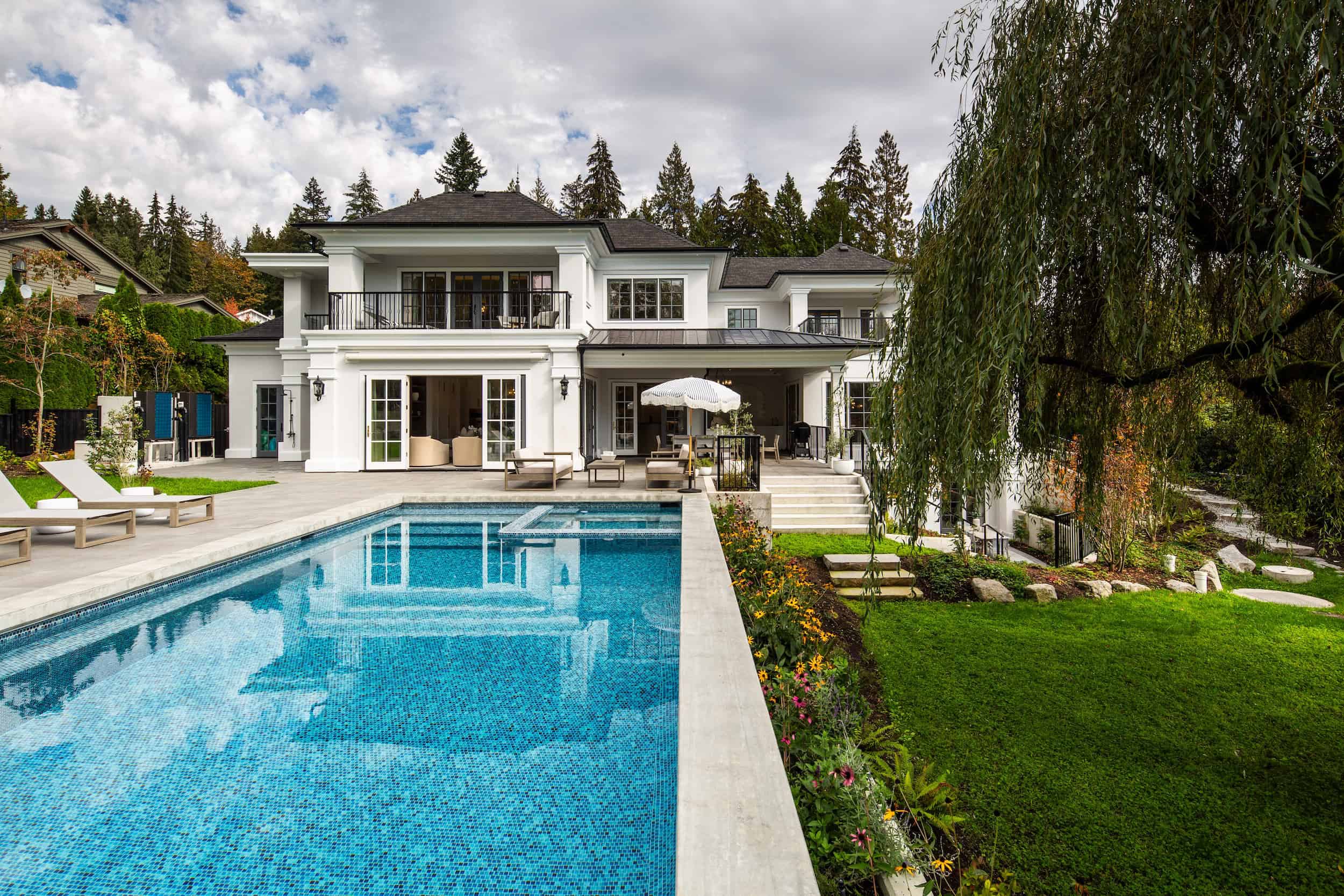
In Vancouver luxury home renovations, for instance, the difference between ordinary and exceptional work often appears in the transitions. How does new work meet old work? How are exterior details protected from rain exposure? How are mechanical upgrades integrated without compromising ceiling heights or architectural lines? How does a renovation improve performance while preserving the calm, refined character of the home?
The same questions apply to ongoing maintenance. A luxury residence should not be patched into decline. If a custom home renovation introduced specialty materials, concealed systems, or bespoke detailing, the maintenance file should reflect those decisions. Future trades need to know what products were used, where access panels are located, how finishes should be cleaned, and which substitutions are unacceptable.
A property that took years to design and build deserves more than reactive service calls. It needs stewardship.
The first inspection sets the tone
A serious maintenance relationship usually begins with a careful baseline inspection. This is not a casual walkthrough. It is an attempt to establish the building’s current condition, identify risks, and prioritize work in a way that matches the owner’s objectives.

Some owners want immediate stabilization before a larger renovation. Others want a five-year maintenance plan that protects asset value. A real estate developer may be focused on turnover quality, warranty exposure, and long-term operating costs. A private homeowner may care most about preserving architectural integrity while improving comfort. A strata or property manager may need documentation that supports budget decisions and resident communication.
The inspection should be practical, not theatrical. Photographs matter. Moisture readings may matter. So do plain observations from experienced eyes: staining under a window, hairline cracks that follow a structural rhythm, ponding on a roof, efflorescence on masonry, soft landscaping that directs water toward the foundation, or sealants that have lost adhesion.
A useful first inspection often focuses on five areas:
- Roofs, gutters, drainage paths, and all places where water is collected or redirected.
- Exterior walls, cladding, masonry, sealants, flashings, and window transitions.
- Foundations, crawlspaces, parkades, balconies, and below-grade moisture risks.
- Mechanical, ventilation, plumbing, and electrical systems that affect comfort and durability.
- Interior finishes, heritage elements, and custom details vulnerable to damage during repairs.
The value of this exercise is not only in finding defects. It is in establishing hierarchy. Not every problem is urgent. Not every visible flaw is dangerous. Not every hidden risk can wait. custom home builder A seasoned maintenance team helps owners spend money in the right order.
Water is the quiet negotiator
Nearly every maintenance conversation eventually returns to water. Rainwater, groundwater, condensation, plumbing leaks, irrigation overspray, snow melt, trapped vapour, and humidity all negotiate with a building. If the building has a weakness, water will usually find it.
Historic and modern buildings differ in how they handle moisture, but neither can be ignored. Older homes often relied on drying potential. Materials got wet occasionally, then dried. Modern assemblies tend to rely more on barriers, membranes, and controlled ventilation. When those systems are compromised, moisture may be trapped rather than released.
The most expensive failures are often not dramatic at first. A tiny leak at a deck door. A gutter that spills in one corner. A stone sill with a failed joint. A bathroom fan that vents poorly. A mechanical room with persistent condensation. A planter placed against a wall without proper separation. These details lack glamour, but they decide the future condition of the property.
For multi-family buildings, water management becomes even more consequential. Exterior restoration, waterproofing, roofing maintenance, concrete repairs, and façade work are not cosmetic line items. They protect structure, habitability, and financial stability. Delayed maintenance can turn a manageable repair into a building-wide project with resident disruption and significant cost escalation.
Heritage restoration versus renovation
The words restoration and renovation are often used interchangeably, but they carry different intentions. Restoration usually means returning a building or feature closer to a known earlier condition, often with historically appropriate materials and methods. Renovation allows more change. It may modernize layout, systems, finishes, and performance while retaining selected character elements.
Most real projects blend the two. A homeowner may restore exterior millwork and original stairs while renovating kitchens, bathrooms, insulation, and mechanical systems. A civic or institutional building may preserve a significant façade while upgrading accessibility and building systems. A residence may keep its historic street presence and gain a contemporary rear addition.
The tension is productive when handled well. It forces clear decisions. Which elements are character-defining? Which later alterations have value? Which features are too deteriorated to save? Which performance upgrades can be made discreetly? There is no universal answer. The right decision depends on condition, budget, regulatory expectations, craftsmanship availability, and the owner’s appetite for authenticity.
Specialists in heritage restorations often bring capabilities that general renovation teams may not have, such as historically appropriate millwork, sensitive surface restoration, building envelope repair, masonry knowledge, and experience with old residential, civic, or institutional structures. That expertise matters because the wrong repair can damage both the fabric and the value of the building.
The builder’s role after completion
A thoughtful Vancouver home builder does not view completion as the end of responsibility. Buildings move, dry, settle, and respond to occupancy. Seasonal changes reveal details that were not visible at handover. Owners learn how they actually live in the space. Systems need adjustment. Exterior components begin their maintenance cycle immediately.
For custom home builders in Vancouver BC, the climate demands seriousness about envelope design and aftercare. Rain exposure, coastal humidity, freeze-thaw conditions in some locations, and complex sites all shape maintenance priorities. A beautifully built home still needs attention to drainage, roof assemblies, cladding interfaces, and ventilation performance.
The builder who understands long-term maintenance can make better decisions during design and construction. Access panels are placed intelligently. Materials are selected not only for beauty but for serviceability. Mechanical rooms are organized so equipment can actually be maintained. Exterior details consider how someone will clean, inspect, and repair them years later. These choices rarely appear in glossy photographs, yet they define the owner’s experience.
The same principle applies to a real estate developer. Maintenance should not be an afterthought assigned to future managers. It should inform material selection, detailing, warranties, replacement cycles, and operating budgets from the beginning. A development that is elegant on opening day but difficult to maintain will age poorly. A building designed with maintenance intelligence can retain its dignity for decades.
Documentation is an asset
Good maintenance creates records. Not excessive paperwork, but usable knowledge. A building log should tell the next qualified person what was done, where, why, and with what materials. This is essential for heritage properties, valuable for luxury homes, and indispensable for multi-family assets.
Documentation prevents repeated diagnosis. It also protects the owner from incompatible repairs. If a façade has been treated with a specific coating, if a roof membrane has known tie-in details, if millwork was finished with a particular system, or if a recurring leak was traced to a specific transition, that information should not live only in someone’s memory.
For high-value homes and buildings, a maintenance file may include drawings, product data, paint and finish schedules, appliance and equipment manuals, inspection photographs, service dates, warranty information, and notes from previous investigations. The file does not need to be elaborate. It needs to be accurate and accessible.
This is especially important when ownership changes. Buyers of historic and luxury properties often inherit beauty, but they also inherit uncertainty. Clear maintenance documentation can support confidence during due diligence and reduce the risk of indiscriminate alterations after purchase.
Small repairs require large judgment
There is a particular danger in small repairs: they look simple. A cracked tile, a failed sealant bead, a soft spot in trim, a stained ceiling, or a misaligned door can invite quick action. Yet small symptoms often sit at the edge of larger conditions.
A stained ceiling below a roof deck may be an isolated flashing issue, or it may indicate a broader drainage problem. A sticking door in a historic home may reflect property maintenance seasonal movement, foundation settlement, or a poorly executed renovation that changed load paths. A crack in plaster may be cosmetic, or it may reveal structural movement that needs monitoring. A recurring mould issue may not be a cleaning problem at all, but a ventilation or thermal bridging problem.
This is where experienced trades earn trust. They do not dramatize every defect, but they do not dismiss patterns. They know when to open a wall and when to wait. They know when monitoring is more responsible than immediate intervention. They understand that the least invasive repair is often the most elegant, provided it actually addresses the cause.
For luxury properties, judgment also includes sequencing. If a repair requires access through finished space, how will protection be handled? Can work be coordinated with other maintenance to reduce disruption? Is the repair likely to require a finish match, and if so, who is qualified to perform it? Will the owner be left with a technically repaired but visually compromised room?
When renovation and maintenance overlap
Property maintenance often uncovers renovation opportunities. A roof replacement may be the right moment to improve insulation or ventilation. A façade repair may reveal the need for better flashing. A plumbing repair may open a wall where electrical upgrades make sense. A heritage window restoration may become part of a broader comfort strategy.
The key is discipline. Not every maintenance issue should grow into a renovation. Owners can be pulled into expanding scopes that solve annoyances rather than priorities. On the other hand, refusing to coordinate related work can waste money. Reopening the same finished area twice is rarely wise.
Custom home renovations are most successful when the team distinguishes between necessary repair, beneficial upgrade, and optional enhancement. Necessary repair protects the building. Beneficial upgrade improves performance, durability, or daily use while access is available. Optional enhancement may be beautiful, but it should be chosen deliberately, not smuggled into the budget under the language of maintenance.
In Vancouver luxury home renovations, this discipline is particularly valuable because finish expectations are high and access can be complex. A small change in scope may affect millwork, lighting, stone, mechanical distribution, and architectural alignment. The best teams slow the decision down just enough to avoid regret.
Choosing the right expertise
No single label guarantees capability. A company may be a respected renovation contractor without deep heritage experience. A heritage specialist may excel at preservation but not be the right fit for a contemporary custom home. A maintenance provider may handle routine service well but lack the envelope knowledge needed for complex waterproofing or façade issues.
Owners and managers should look for alignment between the building’s needs and the firm’s proven strengths. When researching names such as T. Jones Group Vancouver or comparing any Vancouver home builder, renovation contractor, restoration specialist, or maintenance provider, the essential question is not who uses the broadest language. It is who can demonstrate relevant judgment for the specific property in front of them.
The selection process should include a careful discussion of scope, risk, access, documentation, and finish expectations. Luxury work requires trust, but trust should be supported by clarity. A good contractor will explain what is known, what remains uncertain, and what investigation may be required before pricing can be firm.
A useful conversation with a potential maintenance or restoration partner should cover:
- Experience with buildings of similar age, construction type, and finish level.
- Approach to diagnosing moisture, envelope, structural, or mechanical issues before repair.
- Ability to protect occupied spaces and coordinate discreetly around residents or owners.
- Documentation standards, including photographs, product records, and maintenance recommendations.
- Willingness to distinguish preservation, repair, replacement, and renovation options.
The best answers are specific. Vague confidence is easy. Practical explanation is harder.
Multi-family properties need governance, not heroics
Multi-Family building maintenance has a different rhythm from private residential maintenance. Decisions must be budgeted, communicated, approved, and scheduled around many occupants. Emergency work still happens, but a well-run building reduces emergencies through governance.
That means regular inspections, reserve planning, clear maintenance records, and early attention to envelope and mechanical systems. It also means understanding the difference between operating maintenance and capital renewal. Cleaning gutters, servicing equipment, and repairing sealant are routine. Replacing a roof, restoring a façade, renewing waterproofing, or repairing structural concrete may require larger planning and professional coordination.
The luxury dimension in multi-family properties is not limited to high-end lobbies or amenities. It is felt in reliability. Elevators work. Water ingress is addressed before residents lose confidence. Common areas are repaired with matching materials. Noise, dust, and access are managed respectfully. Communication is calm and precise.
Property managers know that residents forgive necessary work more readily when it is handled professionally. They are less forgiving when the same issue returns, when schedules shift without explanation, or when repairs appear careless. Maintenance quality becomes part of the building’s reputation.
The ethics of intervention
Historic and modern buildings both deserve ethical maintenance, though the ethical questions differ. In a historic property, the question is often how much original material should be disturbed. In a modern property, it may be whether a quick visible fix conceals an unresolved technical failure. In a luxury home, it may be whether the owner is being guided toward the best long-term choice rather than the most dramatic scope.
Ethical maintenance is honest about uncertainty. Sometimes a wall must be opened to know what is happening. Sometimes a repair can be attempted with monitoring. Sometimes a feature cannot be saved at reasonable cost. Sometimes the aesthetically preferred option has poorer durability. Experienced professionals do not pretend these tensions do not exist. They explain them.
There is also an ethics of compatibility. Materials should not be chosen only because they are available quickly. Mortars, sealants, coatings, membranes, woods, metals, fasteners, and finishes interact with existing assemblies. A mismatch can create future failure. The maintenance team’s obligation is not merely to make the defect disappear. It is to leave the building healthier.
Seasonal rhythm and long-term value
The most effective property maintenance follows the seasons. Before heavy rain, drainage deserves attention. After storms, roofs, gutters, and exposed assemblies should be checked. Before heating season, mechanical systems and ventilation should be serviced. In spring, exterior surfaces, sealants, balconies, and site grading can be reviewed. Interiors should be watched for condensation, movement, staining, or finish changes throughout the year.
This rhythm is not glamorous, which is precisely why it works. Luxury is often protected by ordinary acts performed consistently. Clearing a drain before a storm. Replacing a failing sealant before water enters. Adjusting ventilation before condensation damages finishes. Touching up exterior coatings before substrate deterioration begins. Recording a small crack and watching whether it changes.
Over a decade, these acts shape the financial life of a property. Deferred maintenance rarely saves money. It converts controlled expense into urgent expense. It also narrows options. A timber element that could have been repaired may later require replication. A small waterproofing repair may become sheathing replacement. A localized concrete issue may spread. A minor heritage surface repair may become a loss of original fabric.
For owners of significant homes and buildings, maintenance is not a background service. It is asset management, cultural stewardship, and comfort preservation in one practice.
A building cared for properly grows more composed with age
The finest properties do not remain frozen in their first perfect moment. They mature. Materials gain depth. Gardens settle. Interiors adapt. Systems are renewed. A historic building may carry its age with grace, while a modern residence may retain its sharpness because its details have been respected.
That outcome is not accidental. It comes from choosing the right expertise, acting before problems escalate, documenting decisions, and understanding that every repair leaves a trace. The trace can be crude or refined. It can shorten the life of the building or extend it. It can erase character or protect it.
Property maintenance for historic and modern buildings is ultimately a matter of judgment. The work may involve roofing, masonry, millwork, waterproofing, mechanical systems, custom finishes, or full-scale renovation, but beneath each task sits the same responsibility: to understand what the building is, what it needs, and how to intervene with intelligence.
A well-maintained building does not feel overmanaged. It feels settled, quiet, and assured. Its owners are not surprised by the same failures season after season. Its residents sense care even when they cannot name it. Its value is protected not by spectacle, but by disciplined attention.
That is the standard worth pursuing.
Address: #20 – 8690 Barnard Street, Vancouver, BC V6P 0N3, Canada
Phone: 604-506-1229
Website: https://tjonesgroup.com/
Email: [email protected]
Hours:
Monday: 8:00 AM - 5:00 PM
Tuesday: 8:00 AM - 5:00 PM
Wednesday: 8:00 AM - 5:00 PM
Thursday: 8:00 AM - 5:00 PM
Friday: 8:00 AM - 5:00 PM
Saturday: Closed
Sunday: Closed
Open-location code (plus code): 6V44+P8 Vancouver, British Columbia, Canada
Map/listing URL:
Socials:
https://www.instagram.com/tjonesgroup/
https://www.facebook.com/TheT.JonesGroup
https://www.houzz.com/professionals/home-builders/t-jones-group-inc-pfvwus-pf~381177860
The company also handles multi-family construction, home maintenance, and investment advisory for property owners who want a builder with both design coordination and construction experience.
With its office on Barnard Street in Vancouver, the business is positioned to support custom home and renovation projects across the city.
Public site pages emphasize clear communication, disciplined project management, and craftsmanship meant to hold long-term value rather than short-term fixes.
T. Jones Group collaborates closely with architects, interior designers, consultants, and trades from early planning through completion.
The brand presents more than four decades of family-led building experience in Vancouver’s residential market.
Homeowners planning a custom build, estate renovation, or heritage restoration can call 604-506-1229 or visit https://tjonesgroup.com/ to start a consultation.
The business also maintains a public Google listing that can be used as a map reference for the Vancouver office.
Popular Questions About T. Jones Group
What does T. Jones Group do?
T. Jones Group is a Vancouver builder focused on custom homes, renovations, and related residential construction services.
Does T. Jones Group only work on new custom homes?
No. The public services page also lists renovations, heritage restorations, multi-family projects, home maintenance, and investment advisory.
Where is T. Jones Group located?
The official contact page lists the office at #20 – 8690 Barnard Street, Vancouver, BC V6P 0N3.
Who leads T. Jones Group?
The team page identifies Cameron Jones as Principal and Managing Director, and Amanda Jones as Director of Client Experience and Brand Growth.
How does the company describe its process?
The public process page says projects begin with an initial consultation to understand the client’s vision, lifestyle, property, goals, budget, and timeline, followed by collaboration with architects and interior designers through completion.
Does T. Jones Group work on heritage restorations?
Yes. Heritage restorations are listed on the official services page as a distinct service area focused on preserving original character while improving structure, livability, and performance.
How can I contact T. Jones Group?
Call (604) 506-1229, email [email protected], visit https://tjonesgroup.com/, and follow https://www.instagram.com/tjonesgroup/, https://www.facebook.com/TheT.JonesGroup, and https://www.houzz.com/professionals/home-builders/t-jones-group-inc-pfvwus-pf~381177860.
Landmarks Near Vancouver, BC
Marpole: A major south Vancouver neighbourhood and a gateway from the airport into the city. If your project is in Marpole or nearby southwest Vancouver, T. Jones Group’s Barnard Street office is close by. Landmark link
Granville high street in Marpole: A walkable commercial stretch with shops, services, and neighbourhood activity along Granville Street. If your property is near Granville, the Vancouver office is well positioned for local custom home or renovation planning. Landmark link
Oak Park: A well-known community park near Oak Street and West 59th Avenue. If you live near Oak Park, T. Jones Group is a practical Vancouver option for custom home and renovation work. Landmark link
Fraser River Park: A recognizable riverfront park with boardwalk views along the Fraser. If your project is near the Fraser corridor, the company’s south Vancouver office gives you a nearby point of contact. Landmark link
Langara Golf Course: A familiar south Vancouver landmark with strong local recognition. If your home is near Langara or south-central Vancouver, T. Jones Group is a local builder to consider for custom residential work. Landmark link
Queen Elizabeth Park: Vancouver’s highest point and a common geographic anchor for central Vancouver. If your property is around central Vancouver, the company remains well placed for city-based projects. Landmark link
VanDusen Botanical Garden: A major west-side destination near Oak Street and West 37th Avenue. If your home is near Oak Street or west-side Vancouver corridors, the office is still nearby for planning and consultations. Landmark link
Vancouver International Airport (YVR): A practical regional marker for clients coming from the south side or traveling into Vancouver for project meetings. If you are near YVR or Sea Island connections, the office is easy to place within the south Vancouver area. Landmark link